

Beyond Talent
How Deliberate Practice shapes mastery

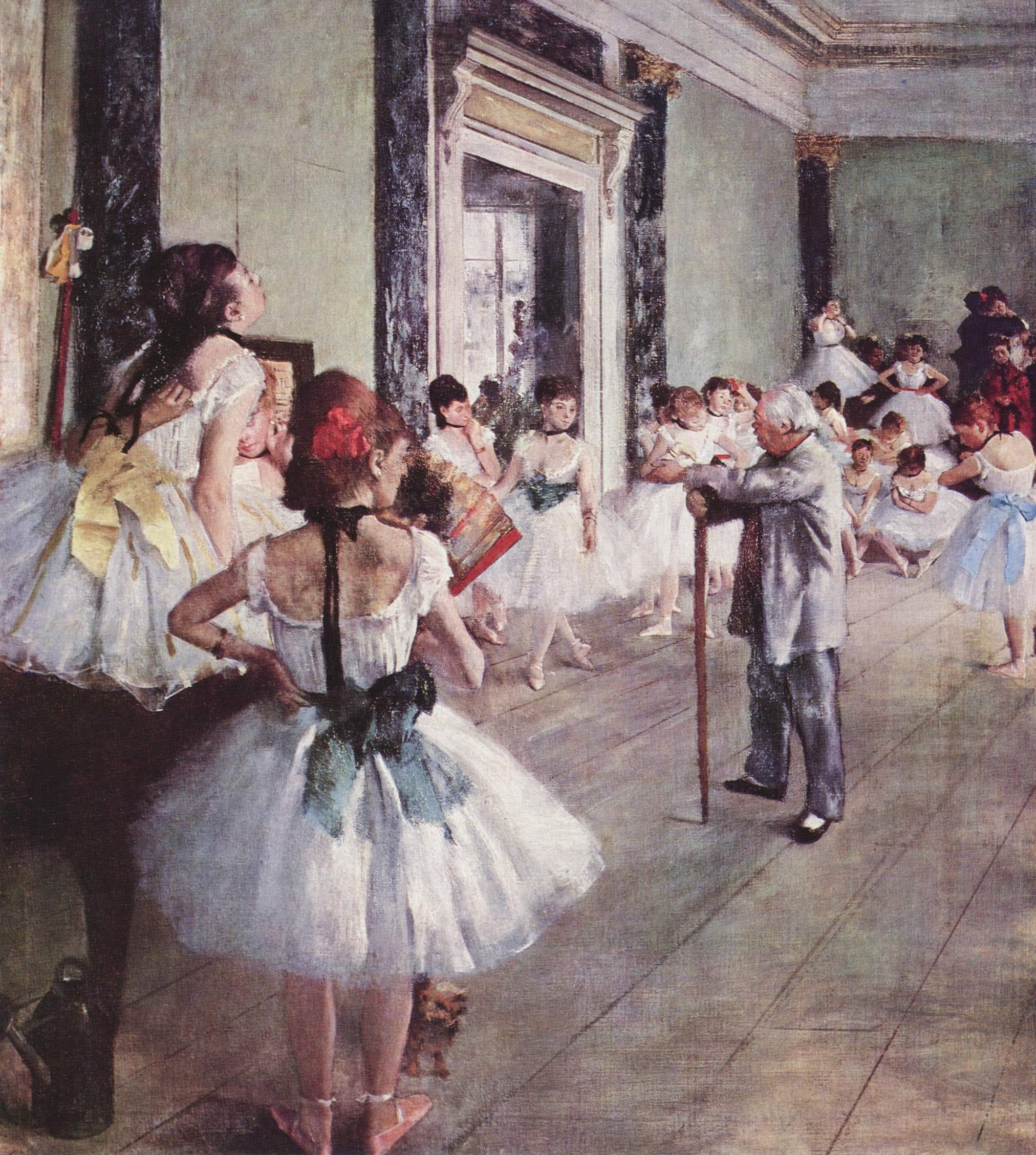
Edgar Degas: La classe de danse (1875), Musée d'Orsay - Courtesy Wikimedia Commons

“Of all the riches available to us in life, self-discipline is surely one of, if not the, most valuable. All things worth achieving can be accomplished with the power of self-discipline. With it we are masters of the energy we expend in life. Without it we are victims of our own unfocused and constantly changing efforts, desires and directions.”
Thus begins Thomas Sterner’s ‘The Practicing Mind’, a book he wrote in 2012. Thomas Sterner believes in practice. He is a successful entrepreneur, an accomplished musician, and composer, a highly skilled piano technician, a studio engineer as well as a private pilot, an experienced sailor, an archer, and an expert golfer.
Sterner, used his love of practice to acquire an impressive variety of skills at top level. His idea of practice is closely related to the concept of ‘deliberate practice, a skill improvement method used in a wide range of fields, from sports to music and education.
The concept of deliberate practice was introduced in 1993 by Swedish psychologist K. Anders Ericsson in an essay titled ‘The Role of Deliberate Practice in the Acquisition of Expert Performance’. The essay aimed to show how individuals could achieve expert levels of performance through systematic training rather than relying solely on their talent or abilities. Anderson expanded further on the subject with his book ‘Peak: Secrets from the New Science of Expertise’ (2016).
According to Ericsson, practice must conform to the following criteria to qualify as ‘deliberate’:
Tasks should be well-defined, with specific goals that the student can fully understand.
The student must be capable of doing the task by himself.
The student should receive immediate feedback on his performance, to be able to make the necessary adjustments for improvement.
The student must have the opportunity to replicate the tasks repeatedly.
The task should be designed by an instructor, and the student must follow the instructions provided by that instructor.
The scientific community has shown a growing interest in deliberate practice because of its importance in understanding how individuals develop skills and achieve high levels of performance across various fields. In the past few years, several books have attempted to study and explain the significance of deliberate practice as a method for developing top-level skills.
Malcolm Gladwell's book ‘Outliers: The Story of Success’ (2008) introduced the ‘10,000-hour rule’, which states that achieving world-class expertise in any field typically requires about 10,000 hours of focused and purposeful practice. Gladwell illustrates this principle with notable examples such as the Beatles and Bill Gates, whose extensive periods of intensive training led them to reach the top in their field. Gladwell specifies that this type of practice involves challenging oneself, receiving feedback, and making specific improvements to enhance skills.
Geoff Colvin's ‘Talent Is Overrated’ (2010) challenged the common belief that exceptional performance comes from natural talent. Colvin argues that many top performers do not possess extraordinary abilities, they just engage in intensive training. For Colvin, not all practice is equal. Deliberate practice involves specific, goal-oriented activities designed to improve performance, often with feedback from mentors or coaches. The book distinguishes between experience and effective practice, as experience alone does not guarantee skill improvement. Colvin argues that believing in talent can be counterproductive - if individuals view excellence as a result of their ability, they may become complacent and neglect the hard work necessary for improvement. For Colvin, anyone can achieve high levels of performance through the right approach to practice - structured learning and continuous feedback.
Matthew Syed, a top English table tennis player, and author (three-time men's singles champion at the Commonwealth Table Tennis Championships) wrote the book ‘Bounce: The Myth of Talent and the Power of Practice’ (2010) examining the close relationship between talent, practice, and success. Syed argues that exceptional performance is not just due to talent, but rather the result of dedicated practice and a growth mindset — instead of a fixed mindset, where individuals believe their talents are static and unchangeable. According to Syed, one needs to incorporate failures in his practice as a valuable component of the learning process.
For Angela Duckworth, an American academic, psychologist, and popular science author, success is more closely tied to ‘grit’ — a combination of passion and perseverance. In her book ‘Grit: The Power of Passion and Perseverance’ (2016) she defines grit as sustained effort and commitment to long-term goals. While talent can be the starting point, it is the consistent application of effort over time that leads to achievement.
Duckworth identifies four key components of grit:
Interest: Finding what you love to do.
Practice: Engaging in deliberate practice to improve skills.
Purpose: Understanding how your goals have a positive impact on the lives of others.
Hope: Sustaining confidence in your ability to achieve your goals despite setbacks.
As an approach to skill development, deliberate practice differs significantly from conventional practice methods. It requires focused attention, and measurable goals, it is highly structured, usually with the help of a coach or mentor who provides feedback, and it focuses on refining techniques and improving weaknesses, pushing the learner beyond his comfort zone.
Deliberate practice has already been shown to be effective in various domains such as music, sports, medicine, and education. Its future will likely involve integration with technology in creating personalized feedback mechanisms through applications and online platforms, cross-disciplinary uses in fields such as business leadership, decision-making, and the creative arts, and more complex approaches such as using deliberate play together with deliberate practice. While deliberate practice is already established as a powerful method for achieving expertise, by embracing flexibility and innovation in its application it can continue to evolve as a vital component of skill development.