

From Professor to 'Dr. Love'
Dr. Leo Buscaglia’s legacy of love

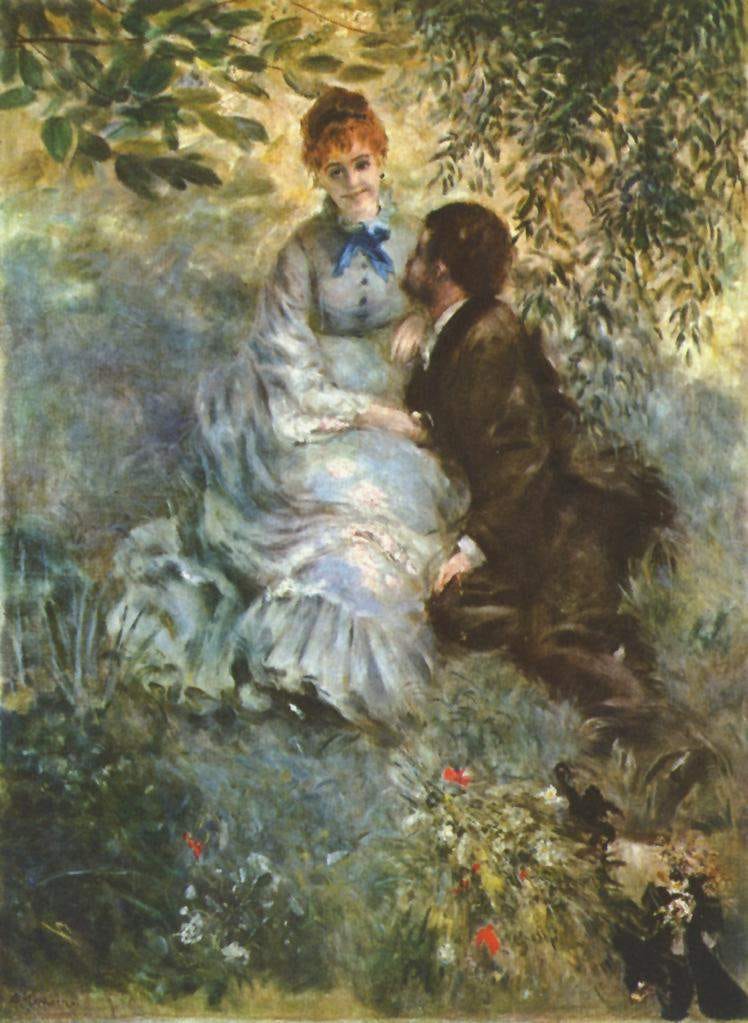
Les Amoureux - Pierre-Auguste Renoir (1875), Courtesy Wikimedia Commons
.jpg#file)
In 1969 the University of Southern California created a course titled ‘Love 1A’, taught by Dr. Leonardo Buscaglia.
Buscaglia (1924–1998) was born in Los Angeles, California to Italian immigrant parents. He got a degree in education from the University of Southern California, and later a master's, and became a doctor in language and speech pathology.
He began teaching at the University, however, an unfortunate event marked him deeply - one of his prize students committed suicide. This incident led him to create a non-credited course, ‘Love 1a’, focused on exploring love in its many forms. The course was not a traditional academic course - it was an experimental class that focused on sharing practical ideas and feelings about love and the human experience. Love 1a became the most popular course taught at the University, attracting some 600 students.
Buscaglia’s engaging teaching style and heartfelt messages resonated with students, earning him the nickname ‘Dr. Love’ for promoting love as an essential component of happiness and well-being.
Dr. Buscaglia began giving lectures on the subject and later was encouraged by publisher Charles Slack to write a book. His first book, ‘LOVE: A Warm and Wonderful Book About the Greatest Experience in Life’, was published in 1972 and was a bestseller, establishing him as one of the foremost thinkers examining love outside the traditional framework.
In the book, Buscaglia explains that self-love is the foundation for healthy relationships. He argues that individuals must first cultivate self-acceptance and a sense of self-worth before they can love others. He suggests that individuals must engage in self-improvement to develop empathy and compassion, which are essential for connecting with others.
Instead of viewing love as a static emotion, Buscaglia examines it as a dynamic process evolving over time. He encourages readers to see love as a journey requiring participation, intention, and commitment. This concept of love challenged the conventional notion of love being just a romantic, unchanging emotion.
Buscaglia considers love not as a noun, but as a verb — an action requiring effort and mindfulness, and emphasizes the importance of being present and engaged in a relationship, enhancing its depth and richness. Buscaglia encourages readers to embrace love in all its forms, affirming that a life lived in love is never dull and helps one find true fulfillment.
In 1973, Dr. Buscaglia wrote ‘The Way of the Bull: A Voyage’ (1973), a journal of self-discovery and personal growth through his travels in Asia. He used the metaphor of the ‘bull’ as a symbol of strength, determination, and the pursuit of one's true path in life. In the book, he emphasized the importance of understanding oneself and finding one’s purpose in life.
Buscaglia examined the concept of interconnectedness, a central theme in many Eastern philosophies, such as Buddhism and Taoism. These philosophies teach that all beings are interrelated and understanding this connection can lead to greater compassion and love for others. In the book, Buscaglia explored how personal experiences can help individuals recognize their shared humanity and the importance of love as a universal force.
In his book ‘Living, Loving & Learning’ (1982), Buscaglia made an exploration of the human experience, based on love and lifelong learning. The book is a compilation of Buscaglia's lectures between 1970 and 1981, adding personal insights.
For Buscaglia, love is not just an emotion, but a basic human need that works as a driving force in our lives. Love should be expressed freely and without expectation, freeing its transformative potential. He encourages readers to engage in their own lives rather than wait for events to unfold - living with enthusiasm and vibrancy allows each moment to be an opportunity for growth and connection. Buscaglia emphasizes the importance of continuous learning for self-improvement. Embracing change and facing new challenges leads to living a rich life - every experience, even a difficult one, can lead to learning and growth.
In the 80’s, Buscaglia gave a series of televised lectures on the Public Broadcasting Service (PBS) which became immensely popular, sharing his philosophy about love, relationships, and the importance of human connection. His programs were noted for their genuine storytelling and practical advice about love in everyday life. During PBS fundraising periods, his shows were among the highest earners.
Buscaglia's style included humor, personal anecdotes, and a focus on the necessity of love in overcoming life's challenges. His unique approach not only inspired audiences but also encouraged many to rethink their relationships and emotional well-being.
Leo Buscaglia, was a fervent believer in the importance of touch and hugging to encourage human connection and well-being - his association with hugging became a trademark of his speeches. At the end of his talks, he would often invite participants to hug him, creating a unique and memorable experience.
Buscaglia's legacy continues through his books and the Leo Buscaglia Foundation, which promotes community spirit and supports charities. His teachings still resonate with people seeking deeper connections in their personal and professional lives, and his emphasis on love as an essential human experience remains influential today.